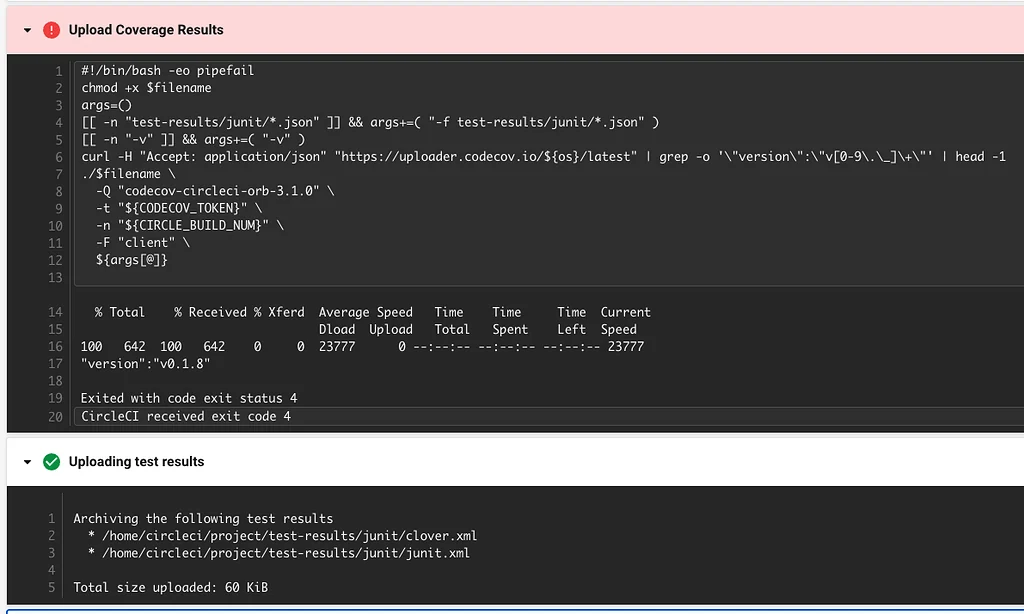
What happened
Between 31 January and 1 April 2021, according to Codecov's own security update, an unauthorised party modified the company's Bash Uploader script, a tool widely used inside customers' continuous-integration pipelines to send test-coverage data back to Codecov. The modified script was altered to also send information from the environment in which it ran, including credentials, tokens and keys passed through the customer's CI runner, to a server outside Codecov's infrastructure. A customer discovered the tampering on 1 April by noticing that the published checksum for the script did not match the version they had downloaded; Codecov disclosed the incident publicly on 15 April.
Confidence and limits
Codecov's own disclosure and its subsequent post-mortem, both opened directly for this article, agree on the discovery method and the two-month exposure window, and both come from the company itself rather than from an independent investigator, though the specificity of the technical account, including the checksum mismatch that exposed the tampering, is consistent with a genuine forensic timeline rather than a minimised one. Neither document states how many customers were actually affected or what specific secrets were exfiltrated in practice, and this article does not estimate those figures.
Why it mattered
The incident is a clear illustration of a risk that is easy to describe abstractly and easy to miss in practice: a script pulled automatically into a build pipeline runs with the same access to environment variables and secrets as the pipeline itself, so a single compromised upload script can expose whatever credentials that pipeline happens to hold, regardless of what the script was originally meant to do. Because the modification lived in shared infrastructure rather than in any individual customer's code, the exposure scaled with how many organisations had adopted the tool rather than with any action or mistake on their own part. It became a widely cited example in arguments for scrutinising the third-party scripts routinely pulled into CI/CD pipelines rather than treating only application code as the object of security review.
Defensive takeaway
Treat every script your CI/CD pipeline downloads and executes as part of your attack surface, verify checksums where a vendor publishes them, and assume that any secret exposed to a build environment should be rotated on a schedule rather than left indefinitely.
- Do you verify checksums or signatures for third-party scripts pulled automatically into your build pipeline?
- Which secrets are currently exposed to your CI environment, and would you notice if one leaked?
- How often do you rotate credentials used inside continuous-integration pipelines, and is that schedule enforced or optional?
The tool that leaked the secrets was never the target itself; it was simply the path of least resistance into every environment that trusted it, which is the property worth defending against rather than the specific vendor involved.
Verify checksums for third-party scripts your CI/CD pipeline downloads automatically, and rotate any credentials exposed to a build environment on a routine schedule.
Codecov's own disclosure and post-mortem agree on the discovery method and exposure window. Neither document states how many customers were actually affected or what specific secrets were taken, and this article does not estimate those figures.
Sources & reading trail
Codecov's own disclosure that its Bash Uploader script was modified between 31 January and 1 April 2021, discovered via a checksum mismatch, and disclosed 15 April.
vendor-primary · Source published: 15 April 2021 · Retrieved: 16 September 2026
Explains at a high level that an exposed credential allowed the uploader script to be altered in cloud storage, and recommends customers rotate CI secrets.
vendor-primary · Source published: Not established · Retrieved: 16 September 2026
Official records establish the facts; confidence labels and defensive takeaways are Patch & Proof editorial analysis. This retrospective draft does not imply the site published on the event date.